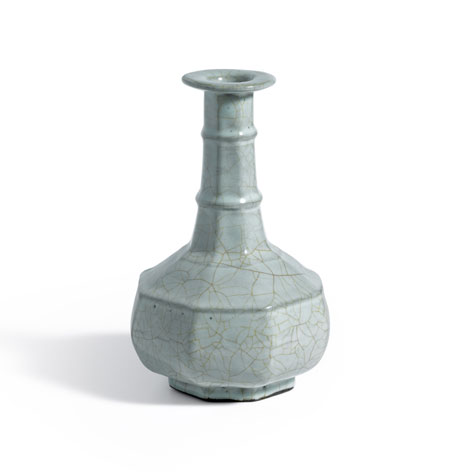
Guan Porcelain
Introduction
Guan porcelain is an exemplary representation of ancient Chinese ceramics, renowned for its historical significance and cultural value. Originating during the Tang Dynasty (618-907), this style of porcelain holds a prestigious place in the history of Chinese ceramics, particularly known for its connection to the ancient Maritime Silk Road and its role in international trade.
Historical Background
During the Tang Dynasty, Guangzhou emerged as a pivotal commercial hub and a significant point of departure on the Maritime Silk Road, acting as the largest foreign trade port in the East. This city became a melting pot for cultural and economic exchanges, with merchants from numerous countries converging to trade goods such as ceramics and silk. The ocean route extending from Guangzhou to the Persian Gulf, the Red Sea, and the east coast of Africa was considered the world’s longest ocean trade route of that era.
Guan porcelain became a sought-after export commodity, leading to the development of export-oriented ceramic production centers such as the Tongguan kilns. These kilns played a crucial role in disseminating Chinese ceramic artistry across the globe, specifically noted for their multicolored porcelain pieces which incorporated unique underglaze painting techniques and foreign cultural elements.
Production Techniques and Materials
The production of Guan porcelain, particularly from the Tongguan kilns, involves complex and labor-intensive processes. Craftsmen like Liu Kunting, a national inheritor of the Tongguan porcelain firing technique, emphasize the meticulous procedure which includes selecting and mixing multiple raw materials such as clay, sand and subsoil. The porcelain pieces undergo more than ten meticulous procedures, including molding, painting and glazing, before being fired at temperatures reaching up to 1,280°C.
Liu has dedicated over five decades to mastering and preserving this ancient art, refining the clay-molding techniques and integrating traditional craftsmanship with modern technology. His workshop in Tongguan, Changsha, showcases a variety of porcelain items ranging from figurines to practical jars, all reflecting the cultural and artistic legacy of the Tongguan kilns.
Cultural Significance and Archaeological Discoveries
The cultural significance of Guan porcelain is manifold, not only in artistic terms but also as a window into the past societal norms and daily life during the Tang Dynasty. Archaeological excavations in the region have uncovered relics, including a celadon-glazed porcelain bowl inscribed with an ancient poem, providing insights into the lives of common people and kiln workers of that time.
The discovery of the Batu Hitam shipwreck in the Java Sea in 1998 further highlighted the international reach of Tongguan porcelain. The shipwreck, part of the ancient Silk Road maritime network, contained over 67,000 pieces of porcelain, with a significant portion attributed to the Tongguan kilns. This find underscores the historical importance of Guan porcelain in global trade and cultural exchange.
Revival and Modern Interpretations
In recent decades, there has been a concerted effort to revive and sustain the tradition of Guan porcelain. Local governments and cultural institutions have taken steps to protect and promote the porcelain industry. Exhibitions are held to educate the public about the historical and cultural context of Chinese ceramics and encourage appreciation for this intangible cultural heritage.
Innovators like Liu Kunting continue to adapt the traditional techniques to modern contexts, creating porcelain items that not only serve as collectibles but also find practical uses in contemporary life. Liu's work includes experimenting with clay compositions for improved texture and integrating porcelain art with local crafts such as embroidery and silverware, thereby ensuring that the ancient art of Guan porcelain remains relevant in today’s world.
Educational initiatives play a crucial role in preserving the art of Guan porcelain. By bringing together artisans, educators and cultural institutions, these initiatives aim to breathe new life into ancient crafts, ensuring their continuity and adaptation for future generations.








